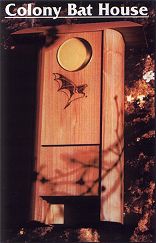
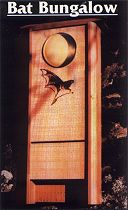
Bats and Insects
Birds, especially swallows, play a major role in controlling
day-flying insects. The amount that a bat eats
varies depending on the season and reproductive condition. A nursing mother bat is
an especially heavy feeder. An individual bat will consume hundreds of moths or
thousands of mosquitoes during a night. Think of it - 10 little brown bats from
the bathouse could catch more than 10,000 insects in an evenings feeding!
Bats and Birds
Bats and birds do not compete, either for food or space. So put
up a few bird houses to encourage birds to nest in the yard.
Location of a bathouse
A bathouse should, if possible, be located near a permanent source
of water. A bathouse should be hung about 12 to 15 feet
above the ground. A bat needs a clear fly-in to their bathouse. The side of
a building works well for a bathouse.
Temperature is very important to a bat. Nursery colonies of females and
young prefer 80 to 100 degrees. Bachelor colonies
frequently select cooler roosts. It is best to orient the bathouse to
receive the maximum sun early in the day.